
I Am Everything is more about the history than the music, not containing a complete song performance. It is committed to correcting the history of rock 'n' roll music and giving Little Richard the credit he deserves for an influence that is ubiquitous in modern popular music. His influence is abundant in rhythm, in vocal styles, in fashion, in stage presence and use of the stage and in uninhibited self expression. It contextualises the musical, cultural and inter-racial workd he emerged in and the impact he had upon it. It also tells the story of his complicated relationship with religion, sexuality and his queerness.
2023-07-28


2023-07-27
Film Festival appetiser: Barbenheimer
We are very blessed to have the film festival we have here, especially in a city as small as Wellington. I have attended film festivals in Sydney and Melbourne where the audience are routinely lined up and herded like cattle. The Venice Film Festival is held on a campus resembling a military base. With all those A-list celebrities and red carpets there is high security, barriers everywhere and the movies are shown in gigantic buildings resembling aircraft hangars. The New Zealand International Film Festival remains friendly and personable despite being comparable in size to festivals in much bigger cities.
We have the benefit in this part of the world of not being important. This allows for much better programming, thanks to the programming of Sandra Reid and Michael McDonnell, as well as the ripples of the legacy of Bill Gosden's expansive and discerning taste. Other film festivals are burdened with the weight of so many mediocre “important” films. They want prestige, they want premieres, they want sponsorship. Most film festivals are largely funded by corporate and state sponsorship. These are expensive operations and these festivals have obligations to their sponsors. They will for sure show the great films, but they'll show a lot of boring stuff that looks good on paper. The sort of films that win Oscars, or at least want to. The 2022 London Film Festival I attended was flooded with so many Netflix films they had their own desk in the lobby. NZIFF is rare as a film festival that obtains about 90% of its running costs from ticket sales, and so its obligation is to its audience, as the programme reflects, curated for cinemagoers of diverse inclination, but certainly for the pleasure of its audience.
An element I am happy to see has survived from the Gosden years is the quality of the film notes. Most film festivals have brief descriptions of the plot or the filmmaker's previous work that resembles vapid and unconvincing advertising copy. Although certain phrases, such as "world class", that would not have survived the integrity and sincerity of Gosden's editorial eye, may have slipped through, the commitment remains to writing notes that describe the film in a way that will attract the audience that will appreciate it. Rather than blandly sell it to whoever is credulous, there is an attempt to describe the film's form and style as well as content, its context and its impact in a way that can actually help you know if it's the right film for you. Because we know that if it's not, there will surely be others that are.
And it goes a week longer than most other film festivals! And the films play all day at all venues, not just evenings and weekends, catering not just for the unemployed amongst us, but those who take time off for the film festival.
Since having attended cinemas in countries around the world I have rediscovered how great a place to see a movie Wellington's Embassy Theatre is. The spectacular and elegant lobby is great, but I prefer the comfortable seats, huge screen and perfect sight-lines from every one of the 900 seats. Barbenheimer is my pre-film festival appetiser.
Barbie is Greta Gerwig and Noah Baumbach's attempt to make a blockbuster that is socially responsible; a story for tween girls that will appeal to everyone; set in a perfect world where things are complex and confusing; encouraging girls to be anything they want to be, but that it's okay to be ordinary; a movie about depression and anxiety that is fun and uppifting; a frothy celebration and a serious critique of an extremely successful and protected brand, totally approved by them. They attempt to subvert expectations while totally satisfying them and they pretty much succeed at all of this, which makes the film feel a bit too thinly spread. But they made a lot of money.
Nolan's directorial style remains as oppressive as usual. He attempts to beat his audience over the head with subtly for as long as he can get away with, in this case three hours.
2023-03-04
Punch (2022) Welby Ings, New Zealand -98m-
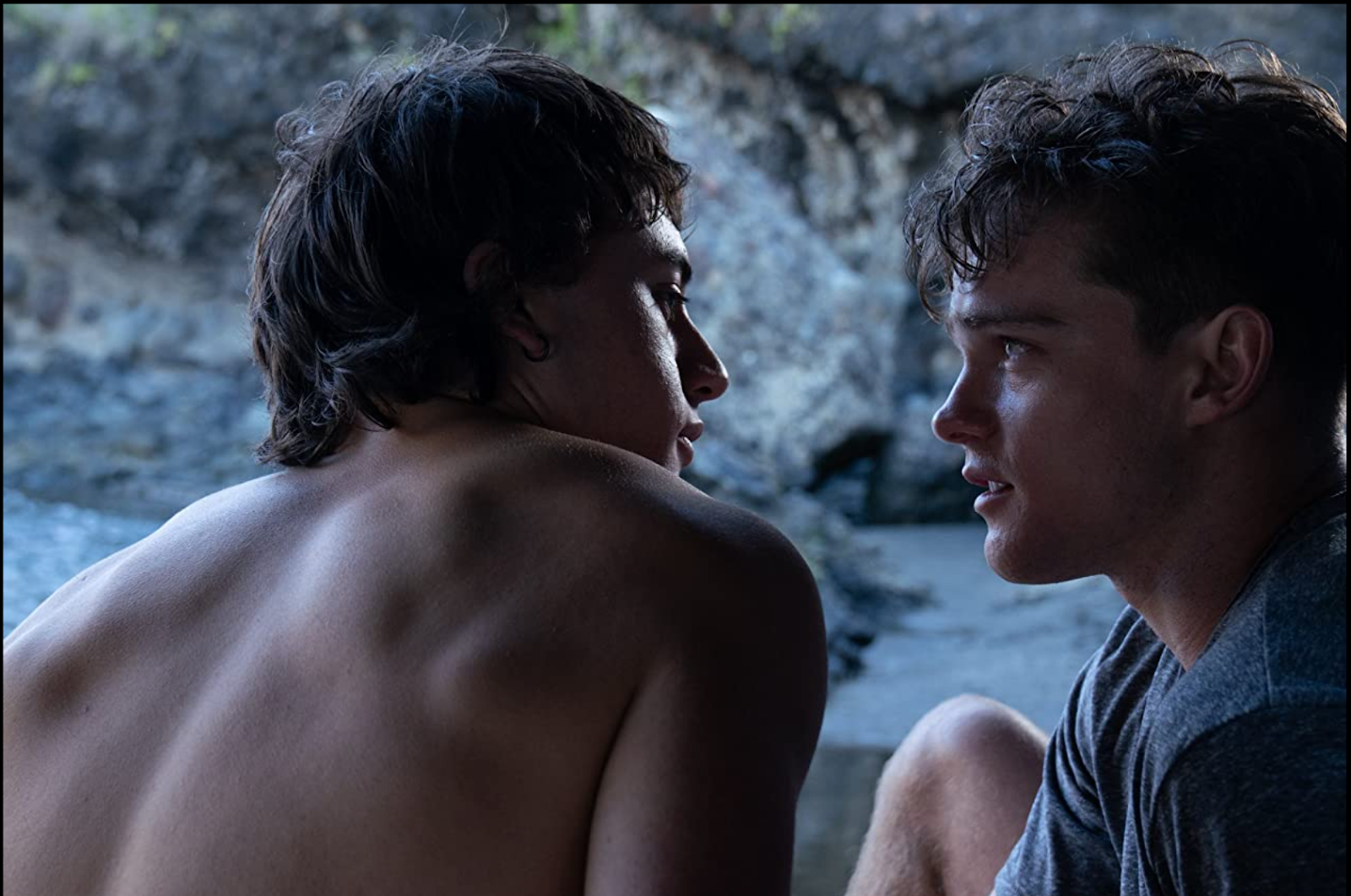
A young boxer in small town New Zealand trains hard under pressure from his alcoholic father and meets an unassimilated gay man living in a shack on the beach.
Tim Roth has top billing as an exhausted alcoholic with no energy left for anything in life apart from his son's boxing training, but his character definitely takes a backseat to the two distinctive and empathetic young men, played by Jordan Oosterhof and Conan Hayes. Oosterhof plays Jim, a boxer with a lean, muscular body and sensitive blue eyes, who passes in this shitty, uptight small town because he's an athlete and masculine. Hayes plays Whetu, who is a social reject from the start of the film; gay, out and Māori, with no known social connections. He is an artist and a sex worker and has carved a tiny world for himself in a beautifully decorated shack in the sand dunes of a big empty black-sand beach past a “no trespassing” sign.
The two characters are so vividly drawn and delicately performed that their coming together is real and meaningful, because we know why they reach for each other in such a place. Away from the highly constrictive social expectations of the town they have a little paradise in Whetu's shack, decorated with many odd artefacts found and created by him. It is through each of them seeking solitude in the wilderness of the beach that they meet, and it is here that they are able to spend time, nurture each other and find love.
The small town of Pīrau and the other characters that inhabit it are merely mise-en-scene for their relationship and the transformation it allows in each of them. It successfully colours in the background that contextualises their internal and external limitations and their expanding identities. A small town with no opportunities, a culture and people who are determined to aggressively limit each other. They are two young men who have allowed themselves to enjoy rich inner worlds, who have not been deadened by small town life and of course will inevitably escape.
Their first encounter is when Jim, passing with his straight mates, drive past Whetu and call out “faggot”. Whetu is already known as an outsider, but at that moment Jim is curious enough to turn around for another look. Their first meeting is on the beach. Jim often goes out there to train and this time, believing he is alone, he gets naked and runs through the dunes and the surf. Whetu is hanging out with his little dog and Jim is embarrassed and instinctively defensive. They tell each other to fuck off and Whetu shouts, “This is Māori land!” This remote empty beach is clearly a sanctuary of safety and self-expression for each of them, and they have invaded each other's space. Their next meeting, Whetu is weaving flax in the dunes when Jim gets stung by a jellyfish and screams for help. Whetu takes him to his little shack hidden in the dunes on a stream bed, pulls out the tentacles and rinses his stings with vinegar. Jim is very impressed with the tranquillity of the place and the care put into each of the strange objects that decorate it. To Whetu's surprise, Jim returns the next day and they discover a place of mutual sanctuary where they can connect away from the expectations and derision of the town.
This is the first feature film from Welby Ings, who has made various shorts. The two characters here are clearly enriched by the protagonists in his short films Sparrow (2016) and Boy (2004). Sparrow is about a sensitive and isolated boy, who wants to fly and never takes off his home-made wings, coming to terms with the macho images he's expected to live up to. Jim tells Whetu about how when he was a child he used to come to the dunes with his wings and try to fly. We briefly observe a spiritual trace of them discarded in the sand as Jim rediscovers his open-heartedness with Whetu. The protagonist of Boy is an isolated teenager who is scorned by the town, a sex worker who picks up men in the public toilet and who has a sanctuary in an abandoned warehouse where he creates strange and beautiful doll sculptures. Whetu is a sex worker who makes no effort to fit into the roles this small-minded town finds acceptable and who instead creates a solo world for himself with strange, beautiful sculptures. Having seen these shorts, both of which can be streamed for free, the lives of these characters are real outside of the events and timeline of the present film. Though they encounter each other at this pertinent moment when they're both ready for change, they have pasts that can only be hinted at, inner worlds that they can only attempt to express to each other, and futures outside of Pīrau in which they will create something totally different of themselves. We get a joyous and moving glimpse of this future at the end.
These shorts were also poetic in the sense that they didn't really work on a narrative level and though they hinted at the beautiful inner worlds of these strange isolated boys they remained somewhat unsatisfying. In Punch he has created a more conventional narrative film with satisfying character arcs, but retained the delicate, poetic hinting at rich inner worlds; Whetu drinking wine from a china teacup; Jim running naked through the dunes. The narrative takes breaks into moments of subjectivity, some beautiful imagery and a little too much use of distorting lenses. The gentle pacing of the protagonists discovering each other was engaging, though the ending was unfortunately abrupt and unresolved.
It is typical to cast pretty actors to play romantic leads, but here we find characters who we love because they are beautiful as complete humans. The love story refreshingly has nothing to do with perpetuating the romantic myth or attaining the higher state of a monogamous committed relationship. These two characters, so coherently woven into the world of this moving film, are merely two people who take the opportunity to open their hearts to each other before moving on with their lives.
2023-02-23
Mi vacío y yo [2022] Adrián Silvestre, Spain -98m-
My Emptiness and I
A young trans woman in Barcelona deals with her transition, dating and daily life.
The film has a straight-forward narrative style to the extent that it borders on documentary, though every scene burns with an authenticity that is entirely engaging. It is emotionally intense and yet naturalistic, confronting complex existential issues, yet never melodramatic. Nothing is played for pathos and yet I was entirely emotionally invested.
Written in collaboration with the protagonist, played by Raphaëlle Pérez, the film depicts the process of her being diagnosed with gender dysphoria, taking hormones, support group discussions with other trans people and the general emotion and confusion of transitioning. The joys and pains of dating and sex with men via an app are dealt with candidly. Finding authenticity is difficult when men are likely to have one of various reactions to her transness: shock, curiosity, fetishisation, uncertainty. She moves through these struggles neither as a victim nor a warrior, simply as a person confronting what is necessary in order to create the life she wants for herself.
2023-02-18
Titanic (1997) James Cameron, 25th anniversary 3D re-release
Who hasn't seen this already? The depressed rich girl meets the free-spirited poor boy and the biggest boat ever built sinks into the middle of the freezing Atlantic Ocean.
25 years after I first saw it at the cinema as an innocent and impressionable 13-year-old at the start of 1998 the film remains the same, apart from becoming slightly 3D, and yet I have changed immeasurably. Leonardo DiCaprio is a lot less convincing as a worldly romantic hero, but he is so gorgeous and charming that the more bitter and cynical 38-year-old version of myself can believe that I would have fallen in love with him anyway, if I was Rose, as did much of the world at the time. I was so immensely moved and thrilled by the movie as a child that I wonder whether I too was allured into giving up my domestic banality and security to live an adventurous and nomadic life, falling in love with any beautiful, open-hearted man I meet.
The music is unashamedly manipulative, filling in the cracks that the thin characters and weak performances leave to make the film as emotionally moving as it is visually. Apart from Kate Winslet dragging the film behind her with admirable commitment, many of the characters are cartoonish and it's amazing that they teeter miraculously on the right side of laughable. Luckily we only need to care about the two romantic leads, and they are so sexy and so hot for each other, and so blank that we can project all our most outlandish romantic fantasies upon them. This is the sort of toxic, unattainable romantic fantasy that seeps into the core of impressionable 13-year-olds like me and stays there for life, disappointing us with every real relationship that fails to compare. Maybe I've been lucky enough to have a Leo or two in my life, maybe I've tortured myself and my lovers in pursuit of fantasy ever since.
At three and a quarter hours the pacing is exceptional; the drawing us into the world, the getting to know the situation, the escalation of conflict and of course especially the application of the inevitable disaster are expertly deployed. Everything comes at the moment you want it. The sinking of the ship – the technical description, the anticipation, the fear, the chaos, the humanity, the beauty, the tragedy, the spectacle – all remains shockingly convincing, both in the visual effects and the editing. When the ship is sinking there are moments of transcendence both ironic and cinematic that don't need protagonists to be achieved; the ornate and meticulous first-class dining room filling up with water and then the spectacular domed skylight shattering under a torrent of water; the half-empty lifeboats waiting in the cold while hundreds of people drown and freeze in front of them.
A spectacle that sucked the whole world down with it into the depths of its allure.
Of an Age (2022) Goran Stolevski, Australia
Melbourne, 1999. A young Serbian-Australian ballroom dancer on the verge of adulthood discovers a surprising connection with the calm older brother of his chaotic best friend.
A tightly focussed dramatic portrait that successfully reveals the protagonist's emotional state-of-being. Capturing that vivid moment at the end of high school where he has not had a chance to yet discover who he is, how he will live or even what life is really like for a queer boy who will inevitably have to find his own way in a world that offers no role-models. He is so used to being lonely that he is genuinely shocked to discover someone who is not only openly gay, but who he actually likes and can effortlessly connect with in a meaningful and genuine way. Though the connection is brief, the need behind it is deep and long-lasting. Ten years later, the tragedy is that his life has changed drastically but the need is the same and remains equally unfulfilled.
The film focuses on only three characters at two distinct moments to make the most of its limitations. One day in 1999 the two men meet in transitional moments for them both and find a feeling of stability together. One day in 2010 they meet again and the resonance of that brief meeting ten years earlier is felt very strongly. Though the best friend/sister who connects them is vividly drawn and enthusiastically performed, the social milieu of the characters swirls around them and the film wastes no time in cutting to its primary focus. The depth and subtlety of how this brief and genuine encounter plays out, and what it means for the protagonist, are conveyed in a naturalistic way that continues to resonate after the film is over.
Sublime (2022) Mariano Biasin, Argentina
A teenage boy in Argentina practices with his rock band and falls in love with his best friend, struggling to tell him how he feels.
A film that has been described as “underplayed” but I would describe as undeveloped. Many scenes play out with no clear purpose, nothing is revealed of the characters and nothing is developed in the plot, which becomes quite frustrating. The aspect ratio is wide, though the camera holds claustrophobically close on the actors' faces or the backs of their heads, and the focus is shallow, suggesting an intimacy and interiority. However, even the protagonist, who takes up most of the screentime, we learn nothing about, what he is thinking or feeling, witnessing only his moody eyes and messy, black, curly fringe.
This is a film that wouldn't exist without the undiscriminating market of the international queer film festival. There is an endless array of films about cute teenage boys struggling with their sexuality. However the actors are usually older than the characters and we are privileged with a depth of insight into their external and internal worlds. Here the actors look like they're actually teenagers, they burp in each other's faces for laughs, cannot communicate their feelings and spend lots of time staring moodily at their phones. Rather than witnessing a penetrating artistic portrait, I felt like I was just hanging out with immature and inexpressive teenagers, which was not fun.
There is a genuine feeling to the milieu, but no depth to the characterisations. The authenticity is most evident in the band performances. The characters are clearly writing and rehearsing their own four-piece rock band, genuinely working hard and improving. There is no post-dubbing or conspicuously well-rehearsed performances. But like most newly-formed teen rock bands, they're not very good.
(Spoiler alert.) The film does not justifies the title, awkward being a more appropriate adjective. A more appropriate title would be Nothing Will Change, a phrase that is whispered in one of the only sublime moments, when the protagonist is dreaming of intimacy with his best friend and bandmate. It is indicative of his friend accepting him after the revelation of his attraction, but also an unfortunate admission that there is almost no development in the entire running time of the film. The only point of tension is whether or not he will admit his love, and there are many frustrating scenes in which he does not. When he finally does it is very underwhelming, though there is a certain poignancy to it not being a big deal.
2023-02-14
Lonesome (2022) Craig Boreham, Australia -95m-
A young rural Australian man escapes a small-town scandal to Sydney, meeting another guy through Grindr.
The plot feels less important than the intimacy between the lead actor and the filmmaker. The filmmaking is stark and direct, dealing with the moment-to-moment reality of the protagonist's marginal life. The impressive performance of lead Josh Lavery is unusual and takes time to reach its full impact. At first I thought his character was too underplayed, but slowly throughout the film I felt the impact of his hopelessness and the tangible reality of his survival-mode. Similarly, there is a lot of nudity and no aspect of his experience is excluded for good taste, the cumulative effect of which is deep empathy and familiarity, like the intimacy of getting to know a new lover. Subsequently, the extent of my identification with the protagonist by the end of the film was quite shocking.
His relationship with the Grindr hook-up that doesn't end is also depicted in a matter-of-fact way that somehow creates a cumulative impact, where the casualness of their commitment to each other obscures the evident fact that they have something very real and significant to offer each other. I hope this film gets a chance to reach the world and that Josh Lavery gets opportunities to surprise us further as a performer.
Close (2022) Lukas Dhont
An intimate friendship between two 13-year-old boys in Belgium is damaged when the boys start high school.
An exceptionally tender depiction of this unself-conscious relationship gives way to an emotionally manipulative tear-jerker. The screening I attended there was one person who couldn't stop sobbing before the film was even halfway through and had to be gently led out by her partner. I remained unmoved as I tried to throw myself into the despair of the film's world; I wanted to cry too. The tangible reality and tragedy of the situation were not conveyed, neither the true impact the events had on the protagonist, so we merely watch the characters go on with their lives, interrupted by long scenes of various people crying. The beauty of the intimacy between boys, the protagonist with his friend, and with his brother, is delicately conveyed in a few gestures and expressions, and it's rarity and precarity is poignant.
2023-02-08
Blueback (2022) Robert Connolly
Abby, a young woman working as a marine biologist, recalls her teenage years with her mother in Western Australia. She is introduced to the diverse marine life in the bay she grew up in, makes friends with a blue groper and helps her mother fight to protect the bay's marine life from encroaching property developers.
A straight-forward, heart-felt film with a pleasant, leisurely pace about pursuing a passion to protect something you care about, aimed at a young audience. The flash-back narrative structure is nostalgic and makes clear why the adult Abby is working to protect the bleaching coral reef, but it obviates any emotional or dramatic impact from either time-period. The underwater photography of the ocean life, and the actors interacting with it, is very beautifully shot, tranquil and convincing of the film's thesis, to protect ocean life. Though short on depth and complexity the film successfully depicts the simplicity and integrity of spending your life caring for your immediate environment.
2022-11-29
Scam of Abundance
Focus family! I am deeply humbled to invite you to participate in a very spiritual fractal exponential Divine Family, co-creating a mandala of abundance with sacred geometry and community. Together in unity we will embody each of the elements on an infinite journey of dream-weaving in surrender and abundance, giving unconditionally to a sacred economy to support each other in manifesting our dreams.
This spiritual journey of sacred infinite abundance begins with embodying the element of fire, flirting with the law of attraction, and along with seven other immortal souls, sending an unconditional gift of $US1440 to the divine being embodying water in the centre of our sacred mandala of abundance, overflowing with generosity from the eternal chalice within your heart.
Our mandala then splits in two and you syncronistically flow into embodying the sacred element of air, blowing over the sacred landscape of our collective activated heartspace by inviting two sacred yes beings who resonate with the magnificence of our collective vision to join our family of love and light and financial abundance, making sure your sacred breath supports our 16 new fires, eight in each mandala, to make their unconditional gifts of $US1440 each to each of our new sacred water beings and keeping our mandalas inflated and aerated.
Flowing in divine grace into the embodiment of the element of earth as our two mandalas become four, you will channel the energy of our beautiful Pachamama to ground our connected family, helping ensure 32 new members join and each unconditionally gift $US1440 so we all may advance.
Having moved through each of the elements week by week in harmony with the cycle of our divine moon you will experience fullness and completion as you finally embody the most sacred and precious of all elements, water. In the centre of one of the eight unique and special mandalas, as the heartbeat of the loom, as the inspiration for our family, the positive love-light that illuminates us all, the most spiritual and sacred of all utterly deserving beings, you will receive the abundance of eight of our 64 overflowing new fires and their unconditional gifts of $US1440 totalling $US11,520 to spend on the manifestation of your most transcendent dreams of infinite abundance. Your ego will dissolve as you allow yourself to surrender to receiving such infinite abundance.
I know what you must be thinking: How can a system based on the need for infinite exponential growth, if the number of people must double every time we move to a new level, if before we get to the end of the tenth mandala we must involve more than twice as many people as exist on earth, possibly bring abundance to everyone? Surely it will collapse at some point, as all things do and all the people who have not yet entered the centre of the mandala will feel disappointed and cheated? That's exactly the point. It's not you that is asking that question, it is your trauma-based fear of abundance, it is your negative need to perpetuate the scarcity mindset you have been taught. It just shows that your heart is beyond closed. Yes, it's a pyramid scheme, but isn't everything a pyramid scheme these days, isn't our whole economic system based on those in the centre taking from those on the outside without having really done anything to earn that money? If you go into this sacred sacred pyramid loom mandala scheme consciously, with good intentions, how can it possibly be bad?
It is important that you enter our divine family in full awareness that when you make your generous gift you may not receive anything in return, and that when you invite others to join, they may never receive the abundance they deserve in return for their trust and commitment. But that's the point. You are deciding in blind faith to trust the flow of abundance, a deeper connection with community, creatively weaving a supportive web of abundance for some; you are feeling a sacred yes, you are committing, you are surrendering. There is no real good or bad, everything is about intentions, and our intentions are definitely good.
Yes, 960 people must be involved for all the people who paid you to get paid, it is mathematically impossible that it works for everyone, but maths is not going to advance your soul towards enlightenment, only the unconditional belief of everyone. Let's step into our hearts again and stop letting fear ruin our heartspaces. There is no true or false, only different perspectives. If you have no fear-based negative expectations then how can you be disappointed? If you are stuck in the conditioned mindset of tangible limits I invite you to think and feel into the infinite. Allow yourself to grow beyond the tangible into the spiritual and you will experience infinite abundance for eternity. Love and light, family, love and light.
2022-03-10
Tired of watching films? A 1990 Bill Gosden speech
I was recently reading an interview with the new director of the Sydney Film Festival where he was asked the question anyone in a similar position can expect to be asked about 1000 times a year.
Don't you get tired of watching films?
Not at all, he replied. What could be more fun? I watch four or five films in a day and I find it exhilarating. Wow, I thought, you can spot the new ones.
Confronted by an interviewer asking the same question I might attempt a similarly ingenious response, but I know that here I can go into much more detail. And because so many people have expressed an interest over the years in this enthralling subject, I've decided to fill my allotted space tonight by telling you how I see movies – and whether or not I get tired of them.
The first thing to point out is that I became used to being paid rather than paying to watch movies at an impressionable age. As a first-year university student I received $20 a fortnight to preview the movies coming to Dunedin and to write the occasional precocious, brilliant review. There can be little doubt I considered myself an arbiter of taste. Of course one of the tragedies of youth is that so much of what strikes you as fresh, bold, original, daring, even precocious and brilliant is actually being recycled by cynical hacks for the thirty-sixth time.
What I saw in movies twenty years ago was probably a good deal more than you'd know from reading what I wrote back then. Movies were mere pretexts for trying poses. “Attitude” wasn't such a recognised phenomenon back then, but a movie column in the student newspaper was the perfect vehicle for lots of it. The cool and lofty heights from which I admired Joseph Losey's The Go-Between (1971) and deplored Mel Brooks's farty Blazing Saddles (1974) collapsed beneath me when I came to consider the films that really moved me, like Cabaret (1972) or the great movies made in the early '70s by Sam Peckinpah. Writing about these I could only rave like a besotted fool or rail against those who couldn't recognise self-evident genius.
2022-02-23
Mess of the Demiurge
When it all started in March 2020 I was
on board with the NZ Government Covid response. I was part of the
Team of 5 Million. I was being kind. There was a global pandemic
and the solution was a well-informed leadership and a population
working together to stop the spread. The first lockdown will always
be remembered as a special time in Wellington. The CBD was
completely empty, everything was closed, no one was at work, the
weather was extraordinarily beautiful and we all walked the streets,
parks and beaches, relaxed and unusually friendly, happily keeping
our two metre distance. Apart from police harassing people for
sitting on benches on Oriental Parade, not considered essential
exercise, it all made sense: we have closed the borders, there is
very little covid here and if we don't allow it to spread we can
eliminate it before it sets in. And it worked. Covid was completely
eliminated from Aotearoa for months and life returned to relative
normality. We enjoyed our well-earned complacency as Covid swept
through much of the rest of the world. It was understood early that
in the event of mass acute Covid hospitalisations, the health system
would be overwhelmed and not be able to cope. Despite this, and with
all that Covid-free time to work with, no serious attempt was made to
increase the capacity or efficiency of the health system.
From the very beginning there were two narratives. There was the clear narrative of the Government, reported every day by our charismatic Prime Minister, Jacinda even gave us updates from her own living room with her child running around in the background. Then there was this strange story that I read about only on Facebook from people who proclaimed that Covid was a hoax or that it was caused by 5G. “Let's be honest,” I posted. “You don't really know if that's true or not.” The other story seemed quite unreasonable and unrealistic and I didn't understand why people were asserting it.
The second nationwide lockdown felt banal and irritating. The CBD was no less busy, everyone was wearing masks, less social distancing, disgust and impatience with anyone coming near. It was an unusually unfriendly time. Auckland was in lockdown for three months. I don't claim to be a health expert, to have access to data or to be able to interpret it better than anyone else, but it is an extreme thing for a government to lockdown an entire population. It is not and will never be casual, something you just try to see if it works. I began to doubt whether it was all worthwhile.
At what point does the Covid response become worse than Covid was ever going to be? This to me is a fundamental question, but tends to receive a reactionary response. It does not suggest an answer, that no Covid response would have been better. It simply suggests the consideration, whether it has already happened or may happen in the future, that the response has done more damage than the virus was ever going to. The reactionary response is a result of the fact that there are only two possible stories: either you swallow whole the narrative of the Government and their Experts or you are a Conspiracy Theorist fueled by Fake News. Almost everyone seems content to place themselves in one of these two camps. I prefer to reserve judgement and remain sceptical. From my perspective, it is highly unlikely that either story is completely true.
2021-12-03
Early cinema of Jane Campion (1990) by Bill Gosden
Bill Gosden was, for almost 40 years, director of the New Zealand International Film Festival. Upon the one-year anniversary of his death The Gosden Years was released by Victoria University Press. It is a beautifully produced collection of his writing about cinema and the art of the film festival. His huge contribution to Aotearoa cinema culture as an exhibitor and curator is widely appreciated. This book acknowledges his contribution to writing about film and the innovative poster art that he often collaborated with designers and artists to create. Below is an article not included in the book that he wrote in 1990.
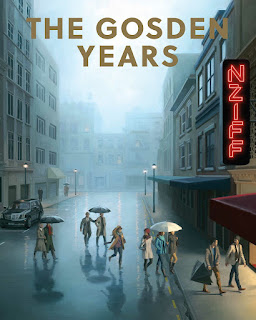
Early cinema of Jane Campion (1990)
A tragic tale of suffocation by family, shot through with bizarre, black comedy, Sweetie is a daring, original and, I think, marvellous movie. It parodies neurotic behaviour while exhibiting an intense commitment to the neurotic point of view. It's a potent blend. Comedy heightens tragedy, tragedy heightens comedy until you can't tell one from the other.
In competition at Cannes, Sweetie's emptied-out performances and full-on visual style earned the contempt of French experts who recognised contrivance but lacked any understanding of the verbally inarticulate world Campion was contriving to express. Closer to home there have been plenty, equally uncomprehending, who found Sweetie equally infuriating. “The work of an enthusiastic amateur,” sniffed one New Zealand critic.
Sweetie, it seems, is a film you love or hate. There have been as many accolades as insults; the film has even won prizes in France. Because her work has such a distinctively Australian/New Zealand inflection (or twang, if you prefer), it's a relief to us hometown cheerleaders that Sweetie has accumulated admirers throughout the English-speaking world.
For if Jane Campion is an amateur then she is so only in the sense that not one of her films contains a hint of professional assignment. In ten years she has expressed a rich, strikingly individual view of the world in a remarkably varied, utterly coherent body of work.
Sex with Straight Guys
Originally published in RFD #186, "Summer of Sleaze II", the international Radical Faerie magazine.
Recently I was sitting in a cafe overhearing a conversation between two straight guys. “I wanna get fucked tonight. I haven't been fucked in ages.” “Fuck yeah, dude, I really need to get fucked too.” They were talking about getting drunk, but it's not what it sounded like to me. What is it about straight guys? Is it simply wanting what I can't have? An addiction to disappointment and rejection? That particular nonchalance? Sometimes it feels extra special when someone chooses to engage with me because they are truly interested in me, rather than cos we like the same stuff sexually. Sometimes I think “straight guy” is a mental illness. The ones I love are gentle, loving, with intelligence and integrity. Why, then, are they so uptight? In my desire to fully explore the depths of connection with a special guy, I don't care if he's straight, but usually he does. For this reason we have found a strange, wonderful and dodgy array of ways in which to manifest our mutual desire to connect when our visions of connection are so different.
Darby first captured my erotic attention one stoned night in our student flat. He cornered me in the kitchen, picked up a knife and offered to cut me open and eat my intestines. Semi-erect and scared of death, I was frozen and silent, stupefied. Another night, when I was drunk and vomiting, hanging over his toilet, he thoughtfully and lovingly got me naked and into the shower to bring me back to life. Afterwards we stood together and he leaned in to kiss me. I leaned in and he leaned back, he leaned forward again and leaned back when I came close, a deliberate cruel tease. I joyously allowed myself to be manipulated while simultaneously developing a genuine friendship with this fascinating and narcissistic guy. Trying to start an orgy, he called me into the bathroom where he was hard and inside his girlfriend, inviting me to play with his balls. We became best friends and went out to a gay club together, just the two of us. “I'm definitely bi,” he shouted in my ear over the noise. “Some of these guys are hot!” Back at his place I don't know how he was feeling but I was horny as fuck, resulting in a very intense wrestling match in our underwear, throwing each other around the room, slamming against the walls. We never expressed physical intimacy together in private, though I did suck his cock briefly in another awkward group sex situation and I still remember the look of pleasure and disgust on his face. Eventually I got so in my head about the relationship that we couldn't even be friends anymore.
2021-03-09
Cousins [2021] by Briar Grace-Smith and Ainsley Gardiner
Entwines the very different lives of three Maori girls, cousins, through tumultuous decades, after one of them is taken from her family and raised in an orphanage.
A very moving and cinematic adaptation of Patricia Grace's novel, very effectively condensed into movie length while maintaining the scope and complexity of the multiple threads. The lives of these three women, though particular and intimate, effectively represents a larger story of a culture interrupted by colonialism but regaining its strength and groundedness. The interaction between the personal and the cultural, memory and the moment, are woven together with various events, spanning decades, creating a complex portrait revealing how the past, the present and the future interact with each other, how members of a family interact through space and time, in life and in death. Though the performances were sometimes uneven, the editing and Terence Malick-like cinematography very skillfully conveyed a specific yet expansive spiritual and cultural journey through the entire lives of three compelling and tangible characters.
2021-03-07
Raiders of the Lost Ark [1981] by Steven Spielberg
American arrogance as entertainment product
Why is Indiana Jones the hero of this movie? He murders hundreds of people in order to steal valuable artefacts from poor countries. He's not even charming. He's just American. His intelligence is entirely unconvincing. His only apparent ability is determination, and of course miraculous amounts of luck. He is the hero cos John Williams's score makes a catchy noise when he takes action. Ford's performance is only grimace, brawn and hat.
2020-09-02
Tenet [2020] by Christopher Nolan
Loud and impenetrable
A man on an international mission to save the world from the deadliest weapon of all, the future.
Two moods: excessive incomprehensible exposition and LOUD incomprehensible action sequences. At no point do you know what is going on, nor are you given any reason to care. It is at all times tedious, meaningless and irritating. None of the characters are remotely interesting, much of the dialogue is inaudible and the ridiculous convolutions add up to nothing. And this cost over $200 million to make.
2018-11-22
Death in Venice [1971] by Luchino Visconti

Death in
Venice is a sumptuously beautiful Technicolor immersion into
pesilential Venice. Dirk Bogarde gives a lot in his performance as
the isolated composer Gustav von Aschenbach. He is holidaying alone in Venice to recover from the
overwhelming stresses of his life, particularly of being massively
uptight and self-denying, while simultaneously giving of himself
through the committed and considered perfection of his music.
Flashbacks of passionate conversations with a friend spell out
explicitly how we are to interpret the present scenes in Venice.
There is no separation between the man and his music; he expects
perfection of himself, moral purity, and no corruption
through a mere pleasure of the senses. He dreams of a spiritual beauty
that is pure and perfect. And he discovers this in the beautiful
form of a teenage boy he sees in his Venice hotel, holidaying with
his family, the magnificently beautiful Björn
Andérsen. He observes
this boy from afar but does not dare to approach him. Tadzio notices
his attention and is as captivated by his gaze as Gustav is captivated to
gaze upon him. But, as we are so clearly told in the flashback
philosophical conversations, his engagement with life is as a
detached observer.
Bogarde's
performance is excruciating in its precision and commitment to
communicating, through almost no dialogue and often merely sitting alone,
the painful self-loathing expressed as pomposity and cowardice. Gustav is horrified in the beginning to encounter a painted and
flamboyant queen who addresses him on equal terms, as if to a fellow
queen. He does not want to humiliate himself with such shameless
abandon.
Tadzio
plays with his attention and the power it gives him, but Gustav cannot act, cannot place himself on the line, cannot risk to feel so
much, cannot allow himself the potential pleasure promised by
engagement with this beautiful young man fluttering about in front of
him like a butterfly. I suppose this self-loathing and self-denial
speaks to a very specific queer experience that would have been all
too common at the time, and only somewhat less so today. The expression of queer
desire and admiration of beauty is more permissible in Western societies today, but the admiration of the beauty
of adolescent boys, is less permissible perhaps.
Gustav's
struggle is as much present in the languorous gaze of
the camera, its subtle movements and carefully editing, as it is in Bogarde's
performance.
While I
find it unpleasant to identify with Bogarde's character in very
personal and humiliating ways the film remains a work of beauty and
sympathy, with the squalid and dangerous beauty of Venice and the
as-yet-uncorrupted beauty of Tadzio, perhaps equally dangerous.
2018-11-14
Never Say Die [1988] by Geoff Murphy
Flashbacks with Geoff Murphy - A Retrospective Trip
The Geoff Murphy retrospective at Ngā
Taonga Sight & Vision (the film archive) in Wellington has begun
and runs until 30 November.
It
begins with Never Say Die (1988). A young couple are mysteriously
pursued by people with increasingly elaborate attempts to kill them;
they narrowly escape death repeatedly. A sexy, fun and totally
incoherent thriller full of car chases and shoot-outs; with a plot
that barely manages to justify the set pieces and certainly doesn't
do anything else. A Lethal Weapon-style '80s Hitchcock leaning
precariously towards a Buster Keaton routine. Ultimately trash, but
light and effortless, with sexy and engaging star performances from
Temuera Morrison and Lisa Eilbacher. If the film has any meaning
perhaps it can be contained in the opening narration in which Tem's
character complains about the narrow-minded Kiwi mentality, as long
as you know that this film, so obviously a plea for attention from
Hollywood, was Murphy's last film in New Zealand before his long
journey in America as a director for hire.
Subscribe to:
Posts (Atom)