Naked and spectacular

Total pageviews

2018-09-29

The Departed [2006] by Martin Scorsese


I don't understand how there can be near-unanimous acclaim for this film. Is it because Martin Scorsese and his renowned cast can do no wrong? Who can question the work of three-time Academy Award winning actor and legend Jack Nicholson? He is one of the best actors of his generation and of course when his fellow actors were promoting the film they all spoken about how much of a privilege it was to work with him. Is it difficult to notice that he can't actually act anymore; that he merely caricatures himself? Maybe he destroyed himself with playing The Joker in Batman (1989) for which he was given a percentage of the profits and made about $60 million dollars for one of the worst performances from a great actor in the history of cinema. His performance in The Departed was barely more restrained than The Joker. His performance is like a cartoon and utterly unconvincing as a real human being, despite being surrounded by grounded, effective performances. This makes sense discovering that he was given free-reign on set to improvise and ham it up, his director trusting that he is still a great artist, or simply too afraid to question him. Despite Scorsese's definite competence, Nicholson is unrestrained and detrimental.

2018-09-20

Medusa - theatre review

MEDUSA
Circa Theatre, Wellington
21 September - 6 October 2018


How to commend an exciting and stimulating piece of theatre without giving away its secrets?  Yes, there are myriad secrets lurking in the room behind the curtain at the Circa Theatre on Wellington's waterfront.  A box of snakes will be opened in front of you and you will marvel at how realistic those snakes are and how much effort must have gone into making them.  You will see three women with their snakes out.  They will confront you, look at you, stare at you, present in their eyes, present in their flesh.

This is a surprising and delightful work of performance art /slash/ sonic expression /slash/ anti-theatre.  It is devised and performed by three artists with intelligence, integrity, humour, technology and genuine solid earth-flesh.  It is a fuck you to Freud, Joseph Campbell and persistent Greco-Roman patriarchal cultural forms.  It is a fuck yes to the audience and our diverse perspectives.  It is a feminine perspective, a decolonisation of structure and meaning.  It may not make sense, but it was certainly reverberating in my body as I wandered out into the night.

It was a privilege to be sitting in the centre of the front row at the preview performance, knowing that the opening night is already sold out.  I got it raw and real and right in front of me and I had the majestic monsters' eyes locked right into mine.  I felt locked into my seat, though we were twice invited to leave.

I encourage you to attend this show if you want to see some edgy, marginal, calmly shocking, smart and funny theatre-ish performance art that is full-power and exemplifies Women's Theatre Festival's acronym: WTF!

Created by Nisha Madhan, Julia Croft and Virginia Frankovich.

BOOK TICKETS

2018-08-10

Climax [2018] by Gaspar Noé

CLIMAX is a dance horror film about people destroying themselves that literally turns upside down. 

I'm not sure Climax is supposed to be entertainment, nor am I sure it's supposed to be art, which makes me wonder what it is. I guess it's for people who feel like they've seen it all and want something more, bigger, weirder, more perverse, more extreme, more original and at the same time confronting nothing that is uncomfortable, except our ability to absorb violence, distress, hysteria and self-harm.

It will certainly provoke debate, I suppose, like his films usually do, but whether that will be a valuable debate is doubtful, especially when there are much more significant, sophisticated, subtle and sensitive films that are not sensationalist but that are nonetheless confronting controversial themes, rooted in deep human feeling and integrity. This film seems embodied, with all that dance, sex and flesh, but really it is disembodied, disengaging, it pushes you away with its fear and repugnance of flesh, of intimate interactions. The bodies merely damage themselves and each other. 

However, the dance number at the beginning of the film is spectacular and full-on, a much more artful and involving demonstration of intensity and self-destruction than the ludicrous, literal and repugnant rest of the film.

Cold Water [1994] by Olivier Assayas

Cold Water is a film made as part of the French series Tous les garçons et les filles de leur âge, which required filmmakers to set their film in the year they turned 18 and to include a sequence of teens partying to the music of the day.

Olivier Assayas's is an evocative look back at being a teen in 1972 France, albeit from the perspective of a very peculiar and anti-social pair. She is in-and-out of psych wards and he is a potential terrorist. Their absolute disgust with the adults and the institutions they find themselves beneath is passionately performed, though somewhat out of touch with reality, as we can see their life skills and emotional maturity are severely lacking. 

But the film certainly captures that disgust, determination to individuate at all costs and isolation of being a 16-year-old in a world that has no place for them: certainly no child and not yet an adult.  An awkward period for anyone, here captured with passion and sympathy, awkwardness and aggression.

Peppered with the works of Allen Ginsberg, Leonard Cohen, Bob Dylan and Janis Joplin.

Capharnaüm [2018] by Nadine Labaki

Capharnaüm is a rich and moving immersion into the world of kids on the streets of Beirut, Lebanon.  It is also expert filmmaking and even those who are offended by its existence admit these are some of the best performances by young children in the history of cinema.  It is a miserable existence, but told without brutality or pathos.

Having become somewhat jaded by seeing 50 films in the preceding fortnight with the unmissable New Zealand International Film Festival, I was shocked into the silence by the immediacy and deep, intimate empathetic immersion into the life of Zain, a boy of about 12, whose parents have too many children without the resources, energy or enthusiasm to take care of them.  Zain is bitter and caustic in his speech and his eyes are weary and cynical, but he retains a love for his siblings, and when his parents invoke in him a particular unbearable disgust, he runs away to make his own life.  We follow him through the minutiae of his experience with total engagement and compassion, and Zain shows the same compassion himself, despite his precocious world-weariness.

Where else can you expect such intimate and empathetic access to such a world?


2018-08-03

First Reformed [2017] by Paul Schrader

Image result for first reformed film

In 1976 Paul Schrader's script, made into the film Taxi Driver by Martin Scorsese, was released.  This was a powerful cinematic moment that reverberates into the present.  Last year, Lynne Ramsey's You Were Never Really Here covers similar ground; a broken isolated man uses extreme violence to liberate a child from sexual exploitation.  It was hailed by critics, particularly for Joaquin Phoenix's deserving performance, but for me it lacked truth.  It wanted to deal with the real stuff, the difficult stuff, like Taxi Driver had, or at least it wanted to give that impression.  It showed an unequivocal evil, child sex slavery, something that would justify the extreme violence perpetrated by the film's hero in the process of liberating a particular child.  But what was it really confronting?  The violence that perpetuates violence that justifies violence, a violent man damaged by violence who commits violence to stop violence.  Meanwhile, we the audience, who may not yet have been damaged by violence, are exposed to it.  To what end?  Is it artistically rooted, philosophically grounded, ethically justified?  Is this film really the modern installment of the true wake-up call that Taxi Driver delivered?  No, it is not.

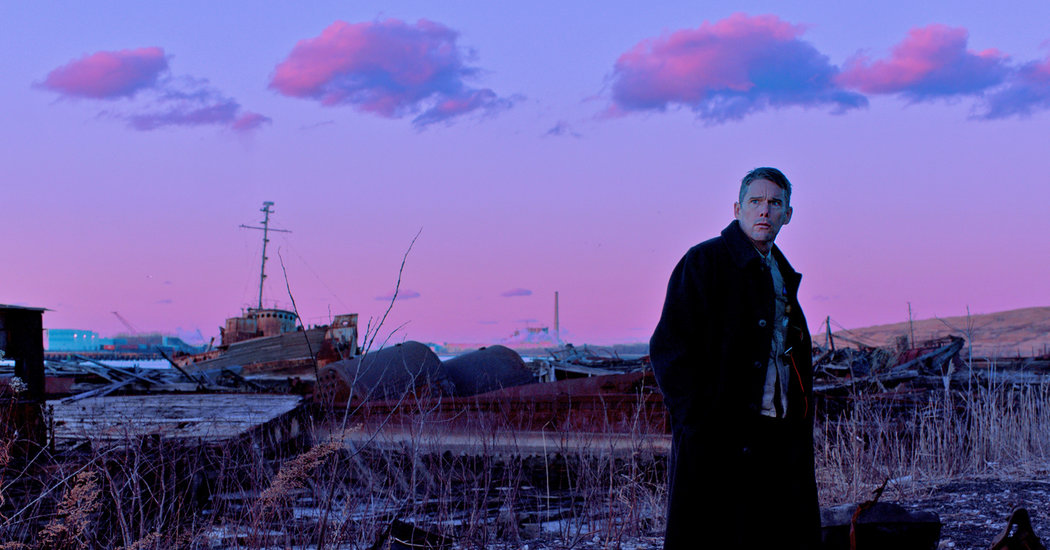
In 2017, 40 years after Taxi Driver, Paul Schrader offers a film of equal weight, difficulty and integrity.  It may not have the same stylistic originality as Taxi Driver, but at its core it is the film's contemporary incarnation.  Ethan Hawke inhabits his character at least as fully as Robert De Niro did his.  He is Reverend Toller of First Reformed, 250 years old, a museum but not really any longer a church.  Abundant Life, with seating for 5000, is the local affiliated modern church, with a full congregation and corporate sponsorship.  Toller is asked by a woman to speak to her husband, an environmental activist overwhelmed with the destruction of the world and in despair at the prospects of the future, particularly about bringing a child into the world, as his wife is pregnant.  Toller finds the conversation very stimulating and in his own emptiness he takes on the man's vision, his disgust and his despair.

The delicate complexities of the situation are woven through the richly portrayed character of Reverend Toller, his internalisation of this despair and his response.  How does one choose to live in the world, engage with the world, having fully accepted that our culture is destroying the planet at a rapid rate.  Will God forgive us?  Or, more importantly, how do we choose to respond ourselves?  There is no prescription of course, there is no naive hope nor unrelenting despair offered, just the masterfully laid out texture of an intricate spread: what Toller sees, what he doesn't see, what is obvious, what is bewildering.  And how do we choose to respond?  With integrity?  What does that involve?  With denial?  What crutch will facilitate that?

In Taxi Driver we were presented with Travis Bickle's solution: kill all the people associated with this girl's sexual exploitation and take her out of the situation.  We saw this violence in graphic detail not to revel in it, not to be entertaining or give the film a gritty realism, but to see it for what it is.  If this is the solution, we need to look hard at it before we choose it.  You Were Never Really Here is an inferior film because it doesn't present the protagonist's response so dryly that we can see it for what it is, it presents it like a thriller, we are there with him, smashing skulls, saving the girl, being the hero, surprised by the plot twists along with him.  There is no philosophical complexity, no ethical integrity.  But in First Reformed we are presented with a situation - repugnant, complex, problematic - and although we have deep empathy for Toller and can relate to his anguish, we are not drawn into his psyche, we can see his strengths, we can see his faults.  We can see his thinking, we can see the solutions he has reached, we can map and trace his mistakes if we choose to.  We can contextualise his decisions.  And thus we have not an easy answer nor a nihilistic despair, but a complex tapestry, an invitation to engage, to think and feel, to make our own decisions; we have an extraordinary central performance and a masterful film.

2018-07-31

Orlando [1992] by Sally Potter

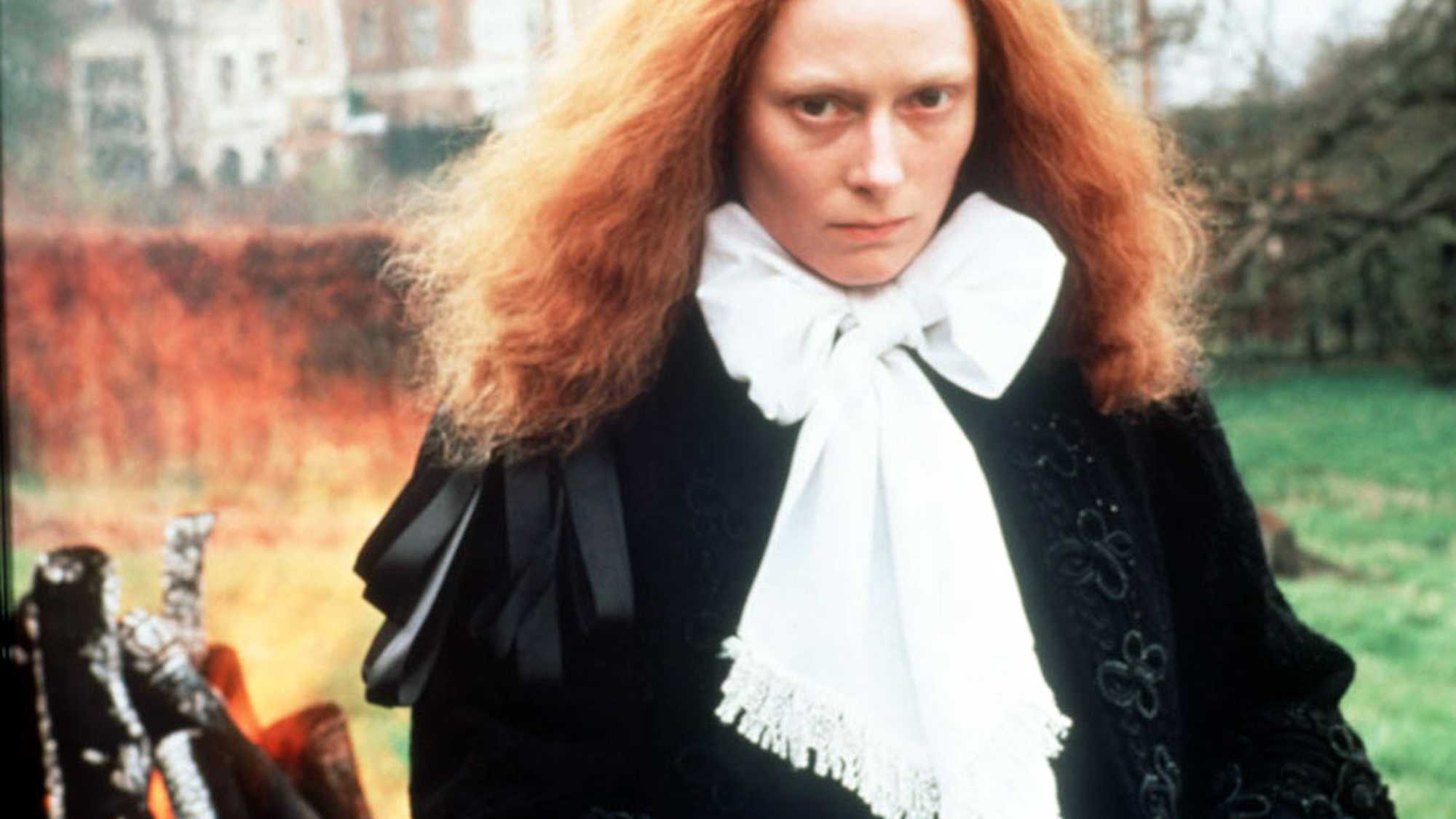
Orlando (image 4)

ORLANDO is quite a spectacular romp through 400 years of English history with Tilda Swinton as our tour guide.  She plays Orlando, a soft-faced young man who the queen loves enough to give him an estate, on condition that he never grow old.  So he does not. 

The costumes and the settings are lavish and the clearest indication of what historical period we are in, because Orlando tends to go against the grain of each period, pursuing his interests with utter passion and determination until he is struck by failure and moves on. 

It is theatrical but also so cinematic, what other medium could facilitate such an extravagant and unlikely a concept?  But it is Tilda Swinton who holds it all together with her dignified performance, wearing the costumes and moving through the moods as if it's all normal, staring at us through the camera when it surprises even her/Orlando. 


I came out of this film uplifted with the clever and light-hearted delight of a long life, carrying around 400 years of baggage, and letting it all go to pursue a new life in a new time.  Our greatest power, after being able to experience life intensely, is to let it all go and move on, ever-changing, ever-evolving, ever-growing creatures that we are.  Funny, spectacular and utterly delightful.

The Seen and the Unseen [2017] by Kamila Andini

The Seen and Unseen (image 1)

In The Seen and the Unseen a boy takes an egg from the offerings to the gods and then falls mysteriously degeneratively sick.  His twin sister wants to keep playing with him while he lies unconscious in the hospital bed.  She processes her defiance, her hope, her realisation and her grief through dance, denying his sickness, defying his sickness, dreaming, channeling the spirits and the animals.  The two worlds, the seen and the unseen, are painfully close, but painfully incompatible.

This is a strange and beautiful world, and this film is worth seeing simply because it is very much from a cultural context not our own.  Don't expect a narrative or a lot of stimulation, but expect gentle and embodied expression from this amazing little girl, sometimes corralling her brother to join her; costume, movement and grief without despair, channeled beautifully through the body and imagination of a child in touch with her Balinese cultural heritage.

Border [2018] by Ali Abbasi

Border (image 1)

An ugly woman working on border patrol has a strange talent for being able to smell fear and guilt on people, perfect for sniffing out who has too much duty-free alcohol.  But her talent, and her ugliness, is a mystery to her, until she meets someone who looks similar.  He likes roaming the forest and eating insects, and he has the clue to her peculiarity.

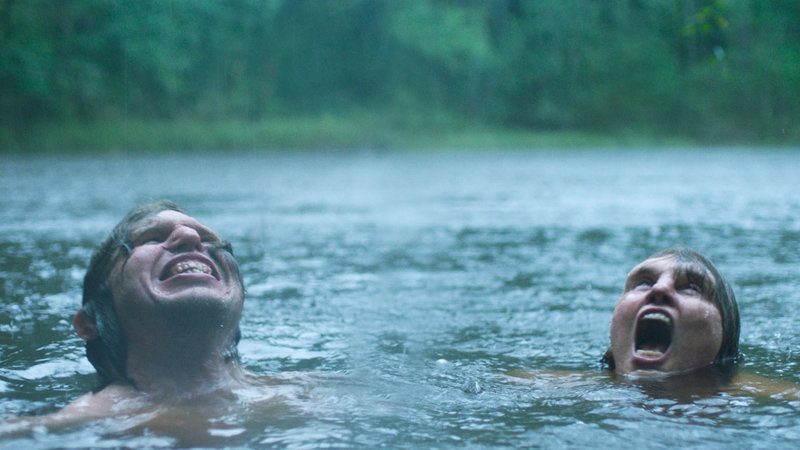
This film is fun, although it's not funny.  It is a genre film for people not dumb enough for most genre films.  Although it's dealing with trolls, mythical creatures of the European woods, there is something subversive about them roaming naked through the forest, encountering wildlife peacefully, eating insects, shrieking joyously in the river in the rain.  But the film always restrains itself, never reverting to sensationalism or sentimentality.  Always dry, always grounded and never giving in to the obvious pitfalls of genre convention.  Having said, this feels like it could be the start of a franchise, but let's hope not; let's hope that our myths are retold, as in this film, with integrity and feeling and not exploited to sell merchandise like the crap of the multiplex.